
Human Design Won’t Fix Your Overthinking. But This Will.
Overthinking has a way of disguising itself as intelligence. It certainly did for me, I went very far using only my mind (or so I thought). It felt responsible, even wise—like I was being thorough, careful, self-aware. But if you looked closely, it was rarely about clarity. It was about fear. My mind kept turning over the same material, hoping that one more pass would produce certainty. It almost never does. What it did produce instead was delay. My life was on pause, even though it felt like I was growing and getting more informed. I wasn’t. I was just waiting around to “feel ready” to live the life I wanted.
This is where Human Design gets misunderstood. It’s often approached as another system to think through—another map to analyze, interpret, and refine. And for someone already prone to overthinking, that becomes a problem. Because now the mind has better language, more precise categories, more nuanced explanations. But it’s still doing the same thing. Looping. Interpreting. Waiting.
There’s an important shift that happens when Human Design is used the way it was intended. It stops being a tool for understanding and becomes a tool for decision-making. Not in a conceptual way, but in a behavioral one. You strategy and authority are not ideas to contemplate. They are constraints to explore and experiment with. They narrow your options, not expand them. And that is a good thing. That process of narrowing is what interrupts overthinking.
From a psychological perspective, this matters more than it seems. The brain is wired with what’s called a negativity bias—the tendency to scan for potential threats and rehearse possible outcomes. It’s a survival mechanism. Combined with the brain’s default mode network (DMN), which becomes active when we’re internally focused, you get a system that easily drifts into rumination. The more you stay in your head trying to “figure it out,” the more active those loops become. What disrupts that loop is not more insight. It’s action.
There’s a body of research in cognitive and behavioral psychology showing that action precedes clarity more often than the other way around. Behavioral activation, for example, is a well-established approach in treating depression and rumination. The premise is simple: you don’t wait until you feel clear or motivated. You act first, and the shift in mood and cognition follows. Movement reorganizes the mind. The mind follows the body.
Human Design, when grounded in reality, functions in a similar way. It gives you a way to act without needing full mental certainty. A Generator responds. A Projector waits for the invitation. A Manifestor initiates. A Reflector observes. These aren’t identities to analyze—they’re behavioral anchors to practice and explore. They reduce the number of decisions you have to make in your head and move them into your body and environment.
That’s where something interesting starts to happen. The internal noise doesn’t disappear immediately, but it loses authority. You begin to see that your thoughts are not instructions, they’re commentary. And the more you act in alignment with your strategy and authority, the more evidence you gather that you don’t need to resolve every thought before moving.
There’s also a neurological component to this. The brain’s salience network helps determine what deserves your attention. When you repeatedly act on embodied cues—gut responses, emotional clarity over time, invitations—you begin training that network to prioritize lived signals over imagined scenarios. In other words, you shift from prediction to participation. This is what Human Design teaches us how to do.
Overthinking thrives in open loops. Too many options, too many interpretations, too many possible futures. Human Design, used properly, closes those loops. Not by giving you perfect answers, but by giving you a way to move forward without needing them. It replaces the question “What’s the best decision?” with something much simpler: “How can I follow my process?”
That simplicity can feel uncomfortable at first. The mind doesn’t like giving up its role as the primary decision-maker. It will try to reinterpret your design, optimize it, get it “right.” But that’s just the same pattern in a different form. The real work is quieter than that. It’s choosing to act before you feel fully ready. It’s letting your decisions be a little imperfect, a little incomplete, and noticing that life continues to meet you anyway.
There’s a point in personal growth where more awareness stops being helpful. Not because awareness is bad, but because it’s already done its job. You see your patterns. You understand your tendencies. Continuing to analyze them doesn’t create change—it reinforces them. What creates change is stepping out of the loop, even briefly, and doing something different.
This is where “Healed Enough” becomes a useful frame. Not as a finish line, but as a threshold. You reach a point where you have enough awareness to stop making yourself the problem. Enough understanding to stop searching for the perfect explanation. Enough insight to begin acting.
Human Design can support that shift, but only if it’s used as a practice, not a philosophy. Something you test. Something you live into. Something that meets the friction of real decisions—sending the message, making the offer, saying yes, saying no—without needing to resolve every internal question first.
Because in the end, overthinking doesn’t resolve through better thinking. It resolves through movement. Through evidence. Through lived experience that shows you, again and again, that you can act without collapsing.
And that’s the deeper form of trust people are actually looking for. Not trust that you’ll always make the perfect decision, but trust that you can move—and adjust—without needing to stand still and figure everything out first.
If you’re done pushing past your limits and ready to move differently, this is the work.
Not more insight—application.
You can book a Human Design session with me. Not a sales call. A real look at where you’re overriding your capacity and how to shift it. It’s all there in the chart.
If it fits, we keep going. If not, you leave with clarity.
Book here: https://calendly.com/z-coaching/human-design-reading
Follow Me on Instagram here: https://www.instagram.com/iamzachcarlsen/
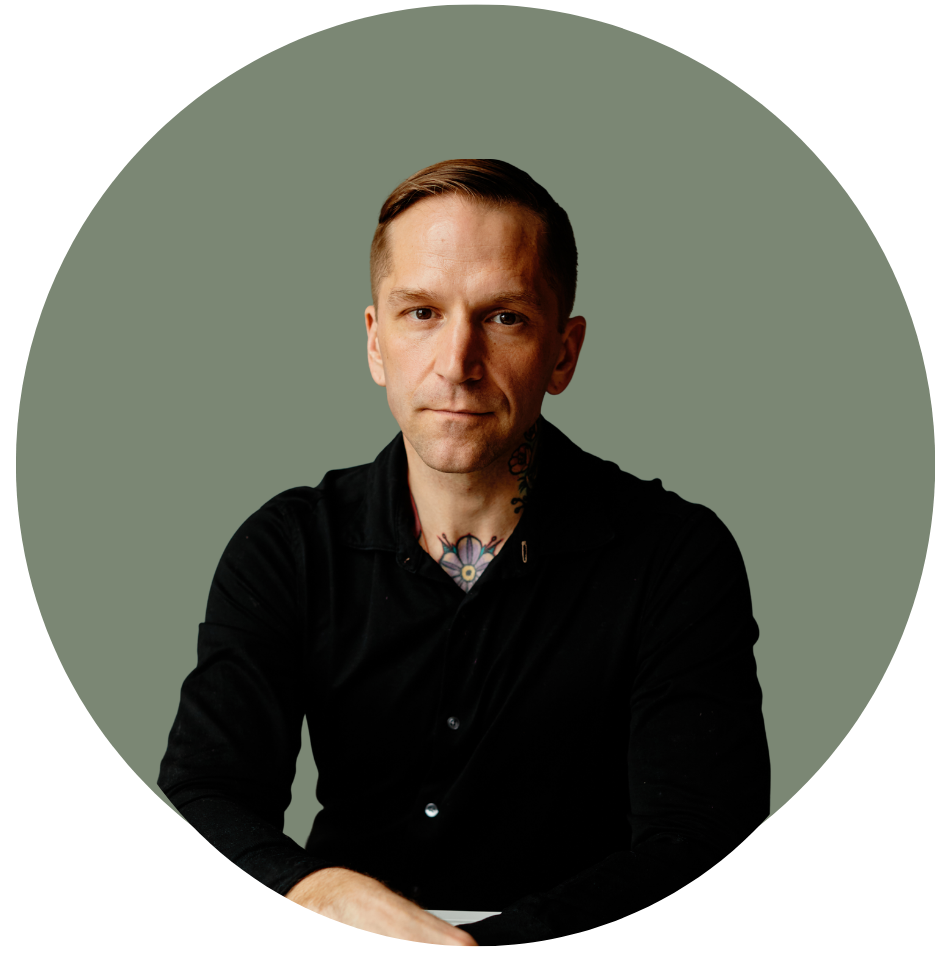
about the author
I've spent the last ten years coaching, teaching, and training all over the world but at the heart of it, my work is simple: I sit with people as they remember who they are.
1 am a former college writing instructor, but today I teach people how to stop living in perpetual self-improvement and finally translate their healing leadership, financial stability, and a life that moves forward. Through my Healed Enough philosophy and Quiet Wealth framework, I help people build capability, confidence, and cash flow without drama, self-analysis spirals, or performative transformation.
I'm trained in StrengthsFinder, Human Design, and Applied Psychology. I have advanced degrees in teaching and writing as well as certifications in leadership from Gallup, Inc in CliftonStrengths Coaching and SSC in Human Design Coaching. In 2021 I earned a Master Coach certification from the Elementum Coaching Institute. What matters isn't the list, it's having the experience to know the right approach for the moment.
I don't see anyone as broken. Sometimes we forget who we are, or get stuck in patterns, or find ourselves on a detour. When you're ready to move through that, I'm here to walk with.