
Human Design and Overwhelm: You Don’t Need to Handle More, You Need to Hold Less
Overwhelm is often treated like a time management problem. Too many tasks, not enough hours, poor boundaries. And sometimes that’s part of it. But more often, overwhelm is a capacity problem. Not a failure of discipline, but a nervous system that has been pushed beyond what it can comfortably hold. When that happens, it doesn’t matter how organized you are. The system stops processing efficiently. Everything starts to feel like too much—not because it objectively is, but because your body has reached its limit.
In psychology, this is described as the window of tolerance. It’s the range in which your nervous system can stay regulated enough to think clearly, feel appropriately, and respond to life without shutting down or becoming flooded. Inside that window, you can prioritize, make decisions, and take action. Outside of it, the system shifts. Too much activation, and you move into anxiety, urgency, reactivity. Too little, and you drop into numbness, avoidance, paralysis. Overwhelm lives on both sides. It’s not just the frantic, spinning feeling—it’s also the quiet freeze where nothing moves. What most people miss is how often they’re living outside that window. Not occasionally. Chronically.
And this is where Human Design becomes more than a personality system. It becomes a way of regulating how much your system is asked to hold at any given time. Because your design doesn’t just describe who you are—it describes how your energy is meant to engage with the world. When you move against that, you don’t just get confused. You get overloaded.
A Generator trying to initiate everything instead of responding is constantly pushing energy outward without the natural feedback loop that regulates it. A Projector trying to keep up with sustained output without the right invitations burns through their capacity quickly and then collapses. A Manifestor suppressing their impulses builds internal pressure that has nowhere to go. A Reflector staying in environments that aren’t right for them absorbs more than they can metabolize. In each case, the issue isn’t just behavior—it’s that the nervous system is being asked to operate outside its optimal range. And the body will compensate.
There’s a growing body of research in neuroscience showing that when demands consistently exceed perceived capacity, the brain shifts into protective modes. The amygdala becomes more reactive. The prefrontal cortex—responsible for planning, decision-making, and perspective—loses efficiency. This is why, in overwhelm, you can’t think your way out. The very part of you that would organize the solution is temporarily offline. It’s not a lack of intelligence. It’s a state shift.
Human Design, when applied practically, helps prevent those chronic state shifts by narrowing how you engage. Strategy and authority are not just philosophical ideas—they are regulatory mechanisms. They reduce unnecessary input, unnecessary decisions, unnecessary pressure. They keep you from opening loops your system doesn’t have the capacity to close.
When a Generator waits to respond, they are not holding the entire world as a list of possibilities. They are engaging with what is actually present. When a Projector waits for recognition, they are not forcing themselves into spaces that drain them. When a Manifestor initiates, they release pressure instead of containing it. When a Reflector takes time, they allow their system to process instead of rushing to resolution. These are not passive choices. They are protective ones.
And over time, they expand your window. Not because life gets easier, but because your system is no longer constantly bracing.
This is the part that reframes overwhelm entirely. It’s not something you push through. It’s something you listen to. A signal that you’ve stepped outside your capacity—not permanently, but in this moment. And instead of asking, How do I get all of this done? the more useful question becomes, What actually belongs to me right now? That question alone begins to close loops.
Because overwhelm thrives in accumulation. Too many inputs, too many expectations, too many internal demands layered on top of external ones. Human Design interrupts that accumulation. It doesn’t ask you to become someone who can handle everything. It asks you to become someone who engages with what’s correct.
“Healed Enough” shows up here as restraint. The ability to stop before you tip over your edge. To recognize the early signs—tightness in the chest, scattered attention, that subtle sense that everything is speeding up—and to adjust before the system crashes. Not perfectly, but consistently enough that your body starts to trust you again.
And trust is what widens capacity. Not forcing yourself to do more. Not proving that you can handle it. But showing your system, over and over, that you won’t keep pushing it past its limits just to keep up. Because the goal isn’t to eliminate overwhelm entirely. That’s not realistic. Life will always have moments that stretch you. The goal is to return more quickly. To spend more time inside your window than outside of it. To recognize when you’ve drifted and have a way back that doesn’t rely on more thinking.
Human Design gives you that way back. Not by simplifying your life, but by simplifying your relationship to it. By reducing how much you try to carry, how much you try to solve all at once, how much you ask your system to hold without support. And in that reduction, something stabilizes. You’re still living a full life. You’re still doing meaningful work.
But you’re no longer operating at the edge of your capacity all the time. You’re moving within it. And from there, everything changes. If you’re done pushing past your limits and ready to move differently, this is the work.
Not more insight—application. You can book a session with me. Not a sales call. A real look at where you’re overriding your capacity and how to shift it.
If it fits, we keep going. If not, you leave with clarity.
Book here: https://calendly.com/z-coaching/human-design-reading
Follow Me on Instagram here: https://www.instagram.com/iamzachcarlsen/
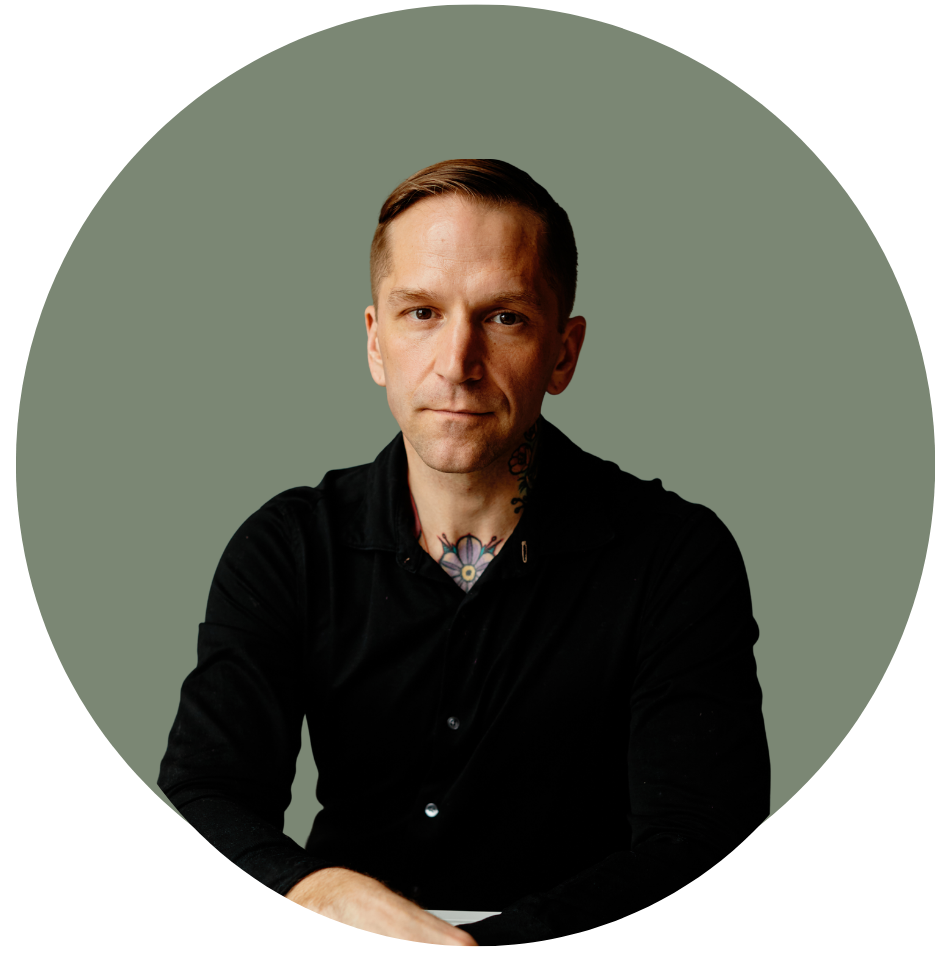
about the author
I've spent the last ten years coaching, teaching, and training all over the world but at the heart of it, my work is simple: I sit with people as they remember who they are.
I am a former college writing instructor, but today I teach people how to stop living in perpetual self-improvement and finally translate their healing leadership, financial stability, and a life that moves forward. Through my Healed Enough philosophy and Quiet Wealth framework, I help people build capability, confidence, and cash flow without drama, self-analysis spirals, or performative transformation.
I'm trained in StrengthsFinder, Human Design, and Applied Psychology. I have advanced degrees in teaching and writing as well as certifications in leadership from Gallup, Inc in CliftonStrengths Coaching and SSC in Human Design Coaching. In 2021 I earned a Master Coach certification from the Elementum Coaching Institute. What matters isn't the list, it's having the experience to know the right approach for the moment.
I don't see anyone as broken. Sometimes we forget who we are, or get stuck in patterns, or find ourselves on a detour. When you're ready to move through that, I'm here to walk with.